What is a highbanker?
A highbanker is basically a portable wash plant for prospectors who want to process a lot more dirt than a pan can handle without graduating straight into giant industrial nonsense. If the gold is fine, spread out, and mixed through a decent amount of wash, a highbanker can turn a painfully slow hand process into something a lot more practical.
Useful machine, not magic machine. It helps when the ground suits it and becomes dead weight when it does not.
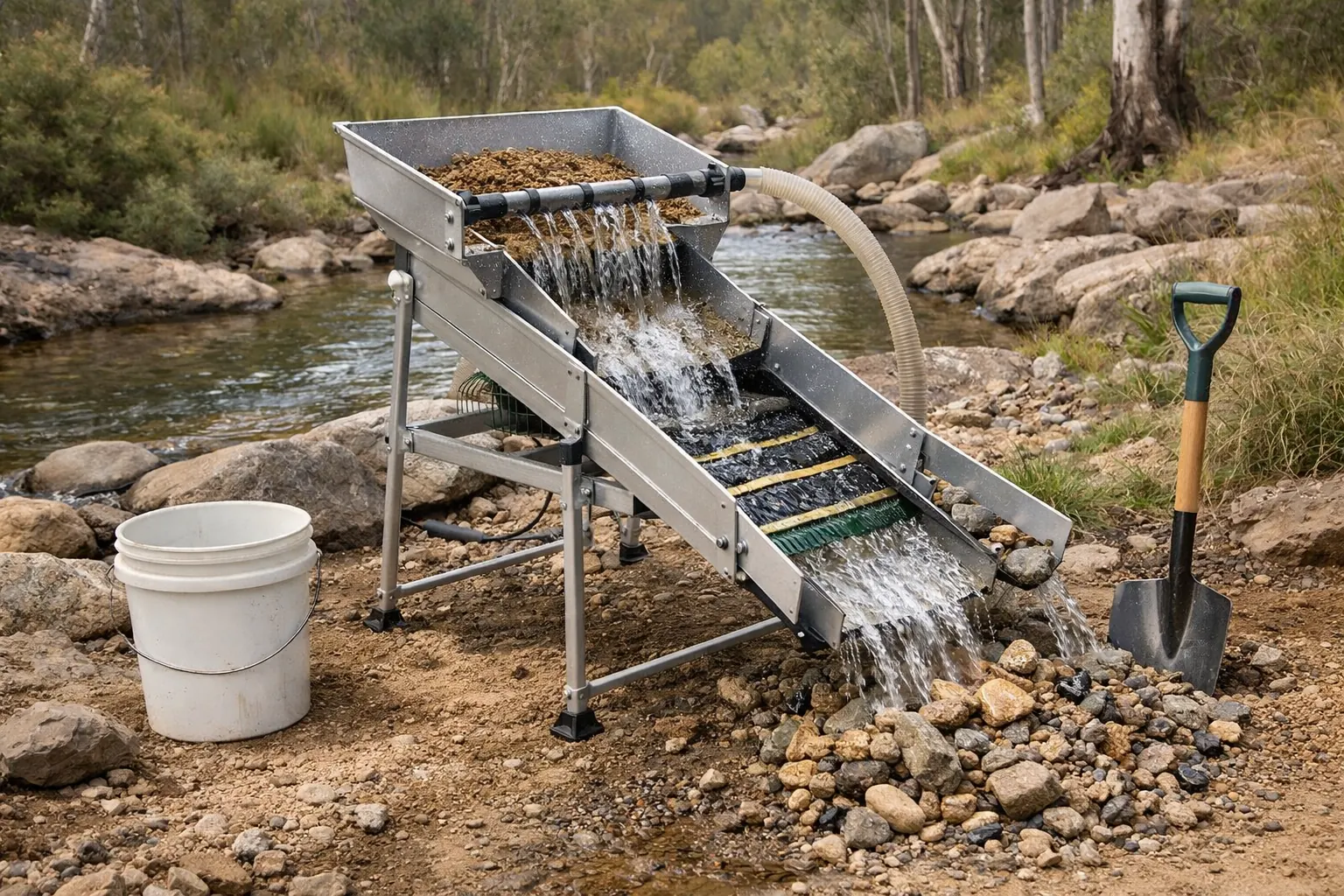
It lets you process more material, faster
You shovel pay dirt into the hopper, water breaks the material down, and the sluice section helps separate heavier material from lighter rubbish. That means you can run a lot more wash than you ever could by hand-panning one pan at a time.
Fine gold often demands more throughput
When the gold is small and scattered, the answer is not always a better daydream. Sometimes the answer is simply moving and processing enough dirt for the little bits to add up.
What each part of the bastard is doing
This is the top tray where you feed in the wash. Material gets broken up here before travelling down through the rest of the unit.
Water helps break clay, wash lighter material through, and keep the feed moving instead of turning into a miserable claggy choke point.
This is where the sorting happens. Lighter material keeps moving while heavier concentrates have more chance of dropping and hanging up.
The material under the riffles helps trap heavies and finer gold while the lighter junk keeps heading out the back.
The oversize rocks and lighter waste wash out after the useful heavies have had a chance to stay behind.
You still need to clean up the concentrates properly afterward. A highbanker reduces labour. It does not eliminate the need to finish the job.
Think of it as a throughput tool. It shines when hand methods are too slow for the amount and type of material you need to test or process.
Good reasons to bring one
- You are working alluvial ground with enough wash to justify setup time
- The gold is fine enough that throughput matters more than romance
- You have access to usable water and legal permission to use the gear
- You already know the spot is worth more than one token test pan
- You want to process more material than panning can realistically handle
A highbanker starts making sense when the ground is proven enough that extra throughput gives you a real edge.
Bad reasons to drag one out
- You are only doing first-pass testing on an unknown spot
- There is barely any usable water
- Access is awkward enough that transport and setup become the whole day
- You have not checked whether that method is allowed where you are going
- You are using machinery to avoid learning basic sampling and panning first
If you do not yet know whether the ground is worth the labour, a highbanker can turn a simple prospecting day into a bulky pain in the arse.
You cannot just throw it in the boot and run it anywhere
This is where people get cute and end up learning the boring lesson the hard way. Highbankers, sluices, pumps, and related alluvial gear are not treated the same everywhere. Rules vary by state, by land status, and sometimes by the specific method or equipment involved.
- Check your state fossicking or prospecting rules first
- Check the official source before the trip, not after loading the car
- Assume waterways, pumps, and processing gear get more scrutiny than a basic pan
- Do not rely on old forum hearsay as your legal strategy
Before you fall in love with throughput, make sure the law still lets you use the bastard where you plan to go.
Learn the basics first
Start with a pan, classifier, scoop, and a bit of discipline. Learn what heavies look like, what wash feels like, and how to test a spot before trying to industrialise your mistakes.
Use a highbanker when the ground earns it
Once you know you are dealing with enough worthwhile material, the machine becomes a force multiplier instead of a shiny burden.
You still need field sense
A highbanker does not replace reading the creek, testing the wash, classifying your material properly, or doing a decent cleanup. It just helps you process more of the right dirt.
The support bits that make it less annoying
- Classifier or sieve for keeping oversize rubbish out of the feed
- Shovel and scoop that are actually tolerable to use all day
- Buckets and tubs for feed, concentrates, and cleanup
- Proper footwear, hydration, shade, and general not-dying-in-the-sun basics
The machine gets the attention, but the support gear is often what decides whether the day runs smoothly or turns into sweaty stupidity.
Gold Rat is worth knowing about
Gold Rat is one of the more obvious Australian names in this space, especially if you are trying to understand what a hobby-scale highbanker setup actually looks like. Whether they pay anyone or not is beside the point here — the gear is relevant, local, and useful for comparison.
Use them as a reference point, not a replacement for thinking.
A highbanker is a throughput machine, not a miracle machine
If the ground, water, and law all line up, it can make fine-gold alluvial work a lot more practical. If they do not, it is just an expensive way to move dirt around while sweating harder.