Backpack sluices for running creeks
If you are working a live creek and do not feel like dragging half the shed in with you, a backpack sluice is one of the handiest little upgrades going. It gives you a simple way to use the water already flowing past, process more material than straight panning, and stay mobile enough to test multiple spots without turning the whole day into a logistics punishment.
Useful little creek tool, not a miracle machine. Best when the water, ground, and laws all line up.
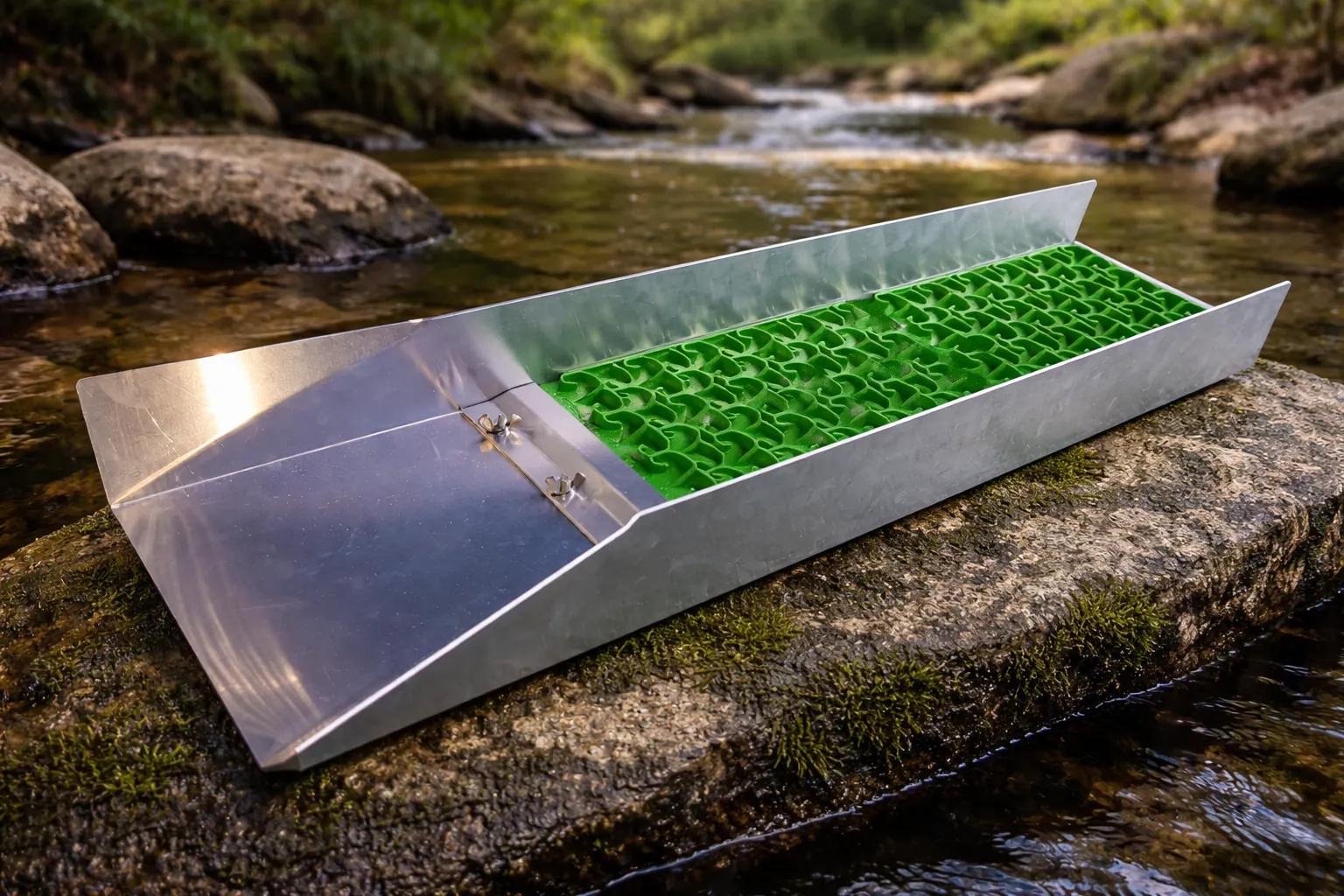
It lets the creek do some of the heavy lifting
A backpack sluice uses natural flowing water to wash lighter material through while giving heavier concentrates and gold a better chance to hang up in the recovery area. That means less hand-panning, more practical throughput, and a setup you can still carry in without needing a forklift and a divorce.
More useful than a pan when the creek earns it
If you have found a decent little run of wash, promising cracks, or a stretch worth sampling properly, a compact river sluice lets you process more of the right material without stepping all the way up to a highbanker or bigger alluvial rig.
Set the bastard up properly and let the water work
Look for steady moving water with enough push to clear lighter material, but not so much chaos that everything blasts straight through. Shallow running creek sections, stable gravel bars, and tidy little channels are your friends.
Get the sluice sitting evenly in the current so water runs through the full length, not just one side. A slight working angle is good. A floppy, crooked setup is how you turn good ground into a guessing game.
Do not tip half the creek in like a lunatic. Add classified or manageable material at a steady pace so the sluice has time to clear lighter rubbish and hold the heavies where they belong.
You want movement, not mayhem. If material is bogging up, flatten or reposition it. If everything is racing out the tail, ease the angle or choose slightly calmer flow.
Once you are done, lift it out carefully, rinse down the recovery section, collect your concentrates, and finish them in a pan. The sluice saves labour, but it does not magically finish the job for you.
One of the big advantages here is being able to test a spot, pack up quickly, and move to the next likely bit of creek without needing a full resettlement plan.
Tiny changes in angle and position make a bigger difference than people expect. If it looks wrong, fiddle with it before blaming the creek.
Good reasons to carry one in
- You are working a live creek or stream with steady natural flow
- You want to process more material than hand-panning alone allows
- You are sampling multiple spots and want a setup that stays portable
- You have creek-access terrain where a larger rig would be annoying or pointless
- You want something compact that still gives you proper recovery potential
This is the sweet spot between a pan-only day and dragging in a bigger machine.
Bad reasons to bring one
- There is barely any water moving through the spot
- The current is so violent it turns setup into a circus
- You have not even tested whether the ground is worth the effort yet
- You are trying to use gear instead of learning how to read the creek first
- You have not checked whether sluicing is legal where you are going
A backpack sluice is handy because it is simple. If the water or the rules do not suit it, it becomes dead weight pretty quickly.
The bits that actually matter
If the whole point is carry-in creek use, it should actually be easy to throw in a backpack, stash in the ute, or keep handy for a quick mission.
You want matting or riffle design that gives fine material a decent chance to stay put while lighter junk keeps moving.
A good compact sluice should be easy to rinse down and clean out without making post-run cleanup more annoying than the whole creek session.
The best small sluice is the one that is light enough to take with you and sane enough to use properly in real creek conditions.
One Australian place to look
If you want to see what this kind of compact creek sluice looks like in the real world, Gold Rat is one Australian supplier worth a look. This is not a paid recommendation or a sponsored placement — just a relevant local reference point for the sort of backpack and river sluices people usually mean when they are shopping for this style of gear.
They offer a few sizes, which is handy if you are trying to work out what sort of carry weight, creek flow, and material volume suits the way you prospect.
Check the rules before you get cute
Sluices, pumps, highbankers, and other alluvial gear are not treated the same everywhere. Rules can vary by state, land status, waterway, and method. Before you build a whole plan around creek processing, make sure the law still likes your idea.
Do not let old forum waffle be your legal compliance system.
Creek prospectors who stay mobile
Perfect for the sort of punter who wants to walk in, sample likely spots, run a useful amount of material, and move on without treating the day like a full industrial deployment.
Pan, classifier, scoop, and a bit of field sense
A backpack sluice works best as part of a smart small-kit setup, not as a replacement for basic prospecting habits and decent creek reading.
The ground still matters more than the gear
If the spot is rubbish, the water is wrong, or the laws say no, the fanciest little creek sluice in the world is still just an expensive aluminium mood swing.
A backpack sluice is a practical creek tool, not a magic gold summon box
If you have got running water, a bit of promising wash, and a setup you can be arsed carrying, a compact river sluice can make a creek day a hell of a lot more productive.